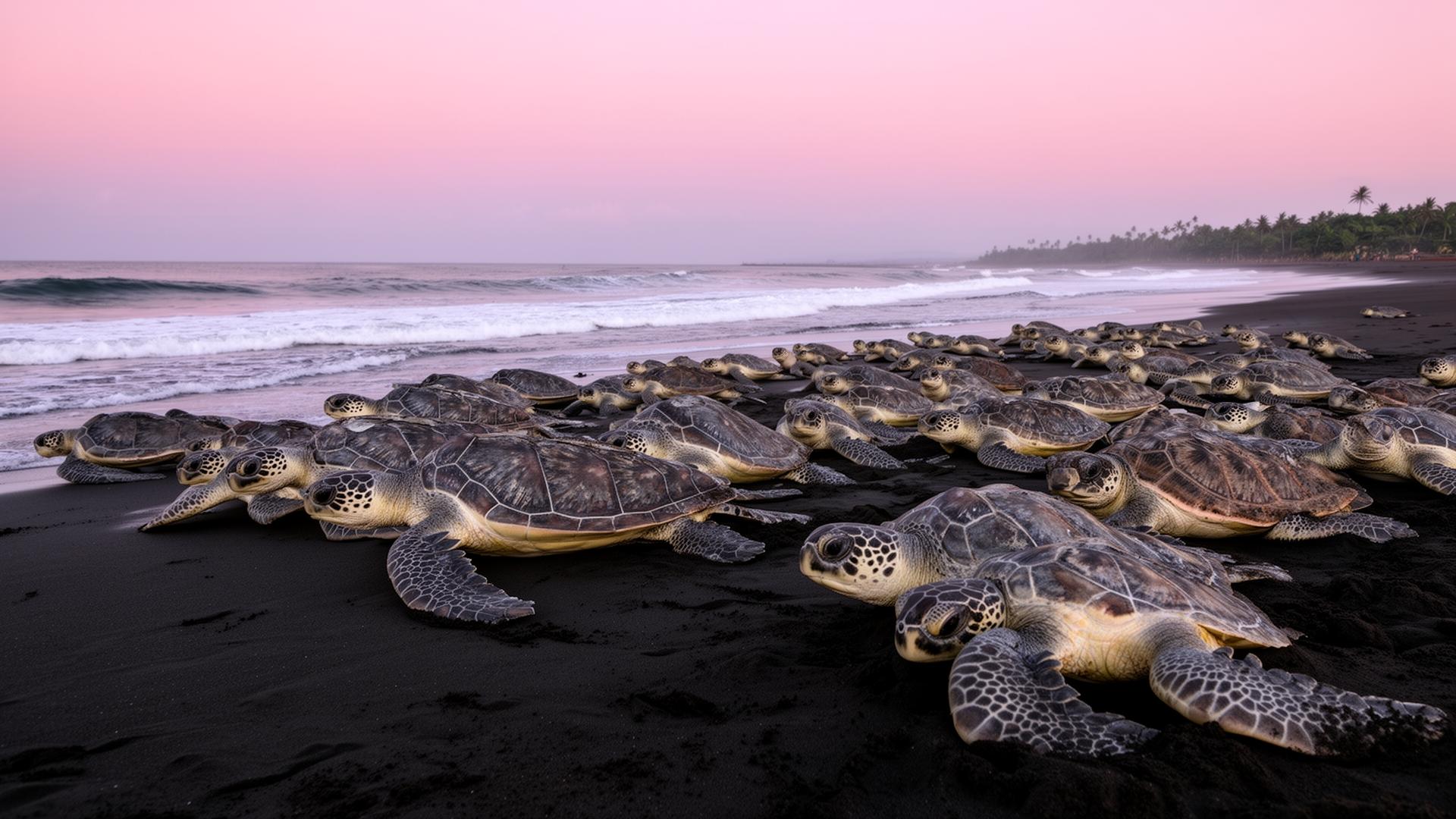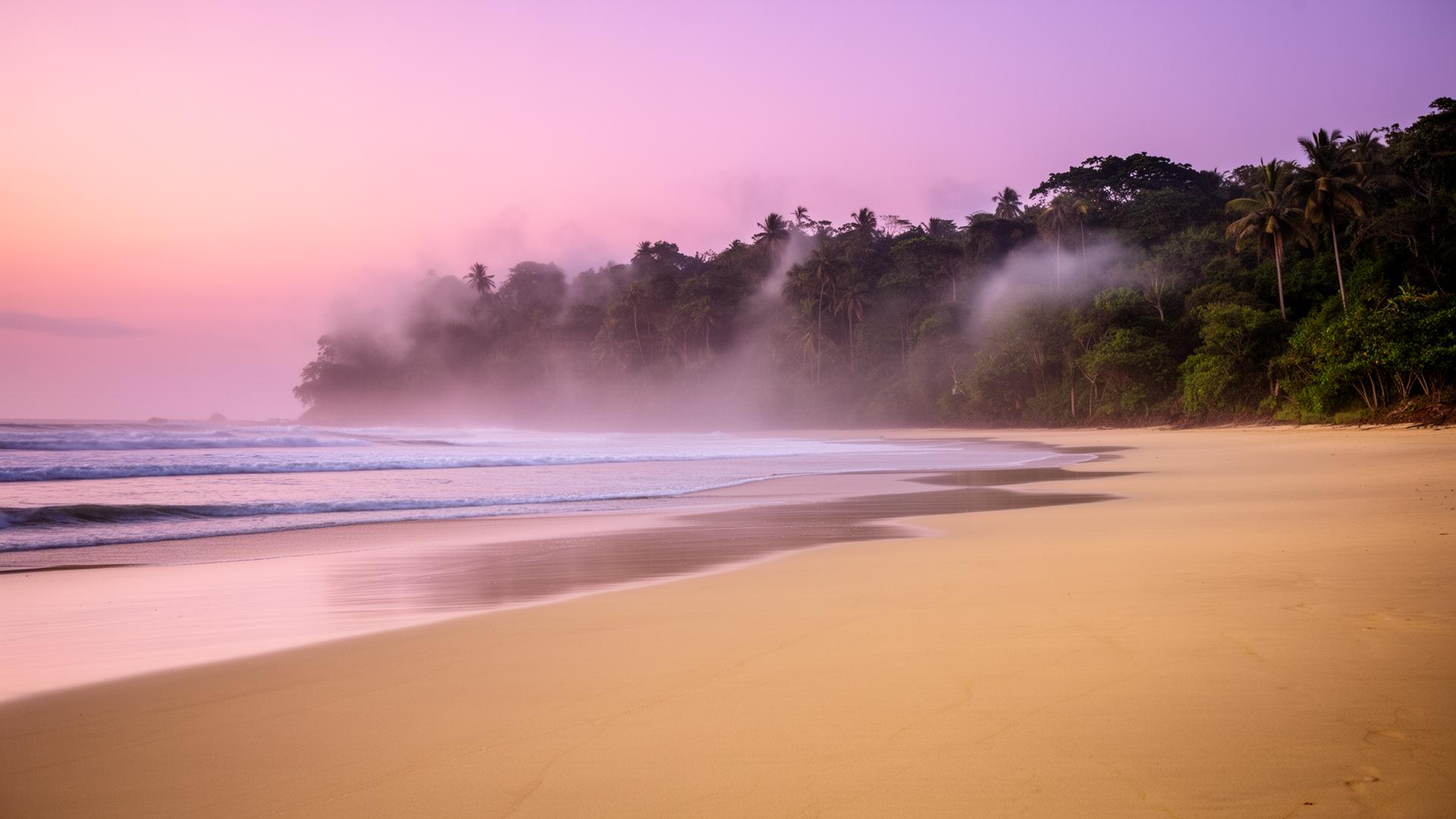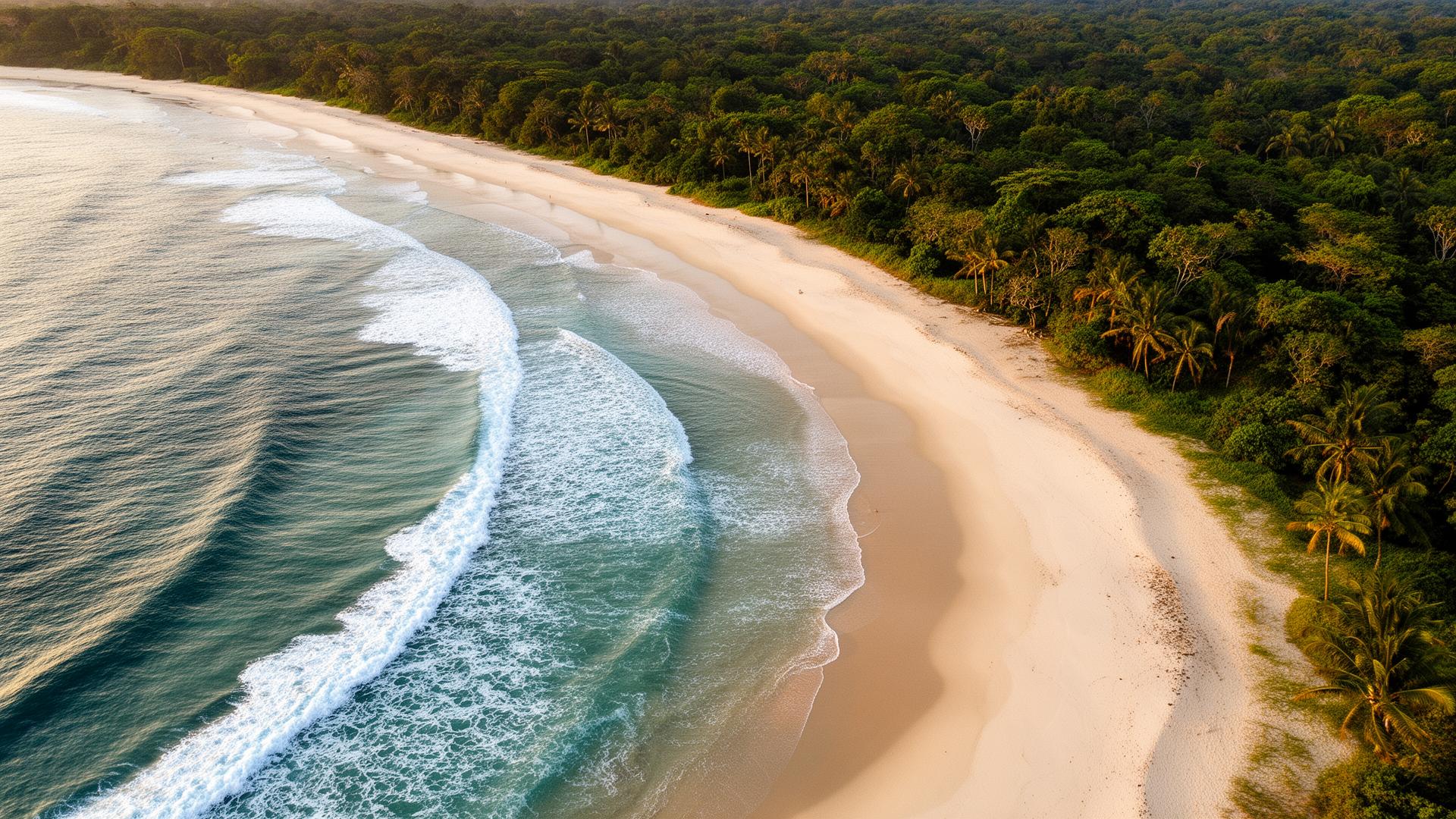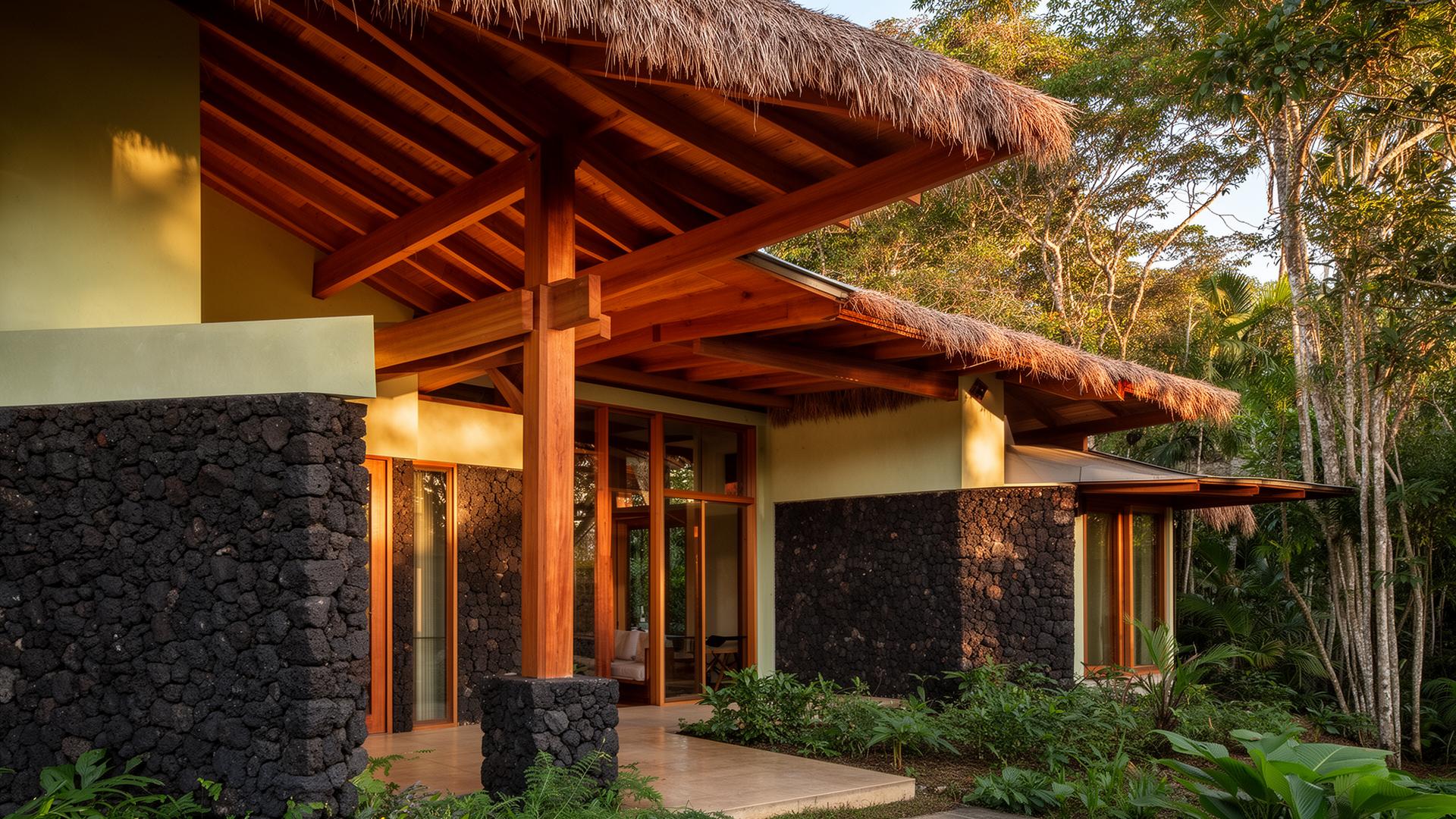
Guanacaste teak, volcanic stone, lime wash, and palapa thatch — the four materials behind tropical architecture in Costa Rica that the climate actually rewards.
There is a question we are asked, almost weekly, by people thinking about building on the Nicoya Peninsula: what materials should I use? The honest answer is that the jungle has already answered the question. It has been doing so for four centuries. Tropical architecture in Costa Rica is, at its best, an act of listening — to humidity, to salt air, to the angle of the dry-season sun, and to the carpenters who have been working with the same four materials since long before any of us arrived.
The brief the climate writes for you
Guanacaste has two seasons and almost no negotiation between them. The verano — November through April — is brilliantly dry, with the sun arriving at an angle that, by ten in the morning, will bleach anything unprotected. The invierno — May through October — brings afternoon storms that move horizontally and last forty minutes at a time. Add a steady salt-laden wind from the Pacific, year-round humidity in the high seventies, and a termite population that is, candidly, thriving.
A building here has to do four things at once: shed water, breathe heat, resist salt, and not feed the insects. The materials that have survived are the ones that do all four without being asked twice.
Guanacaste teak — the wood that earns its name
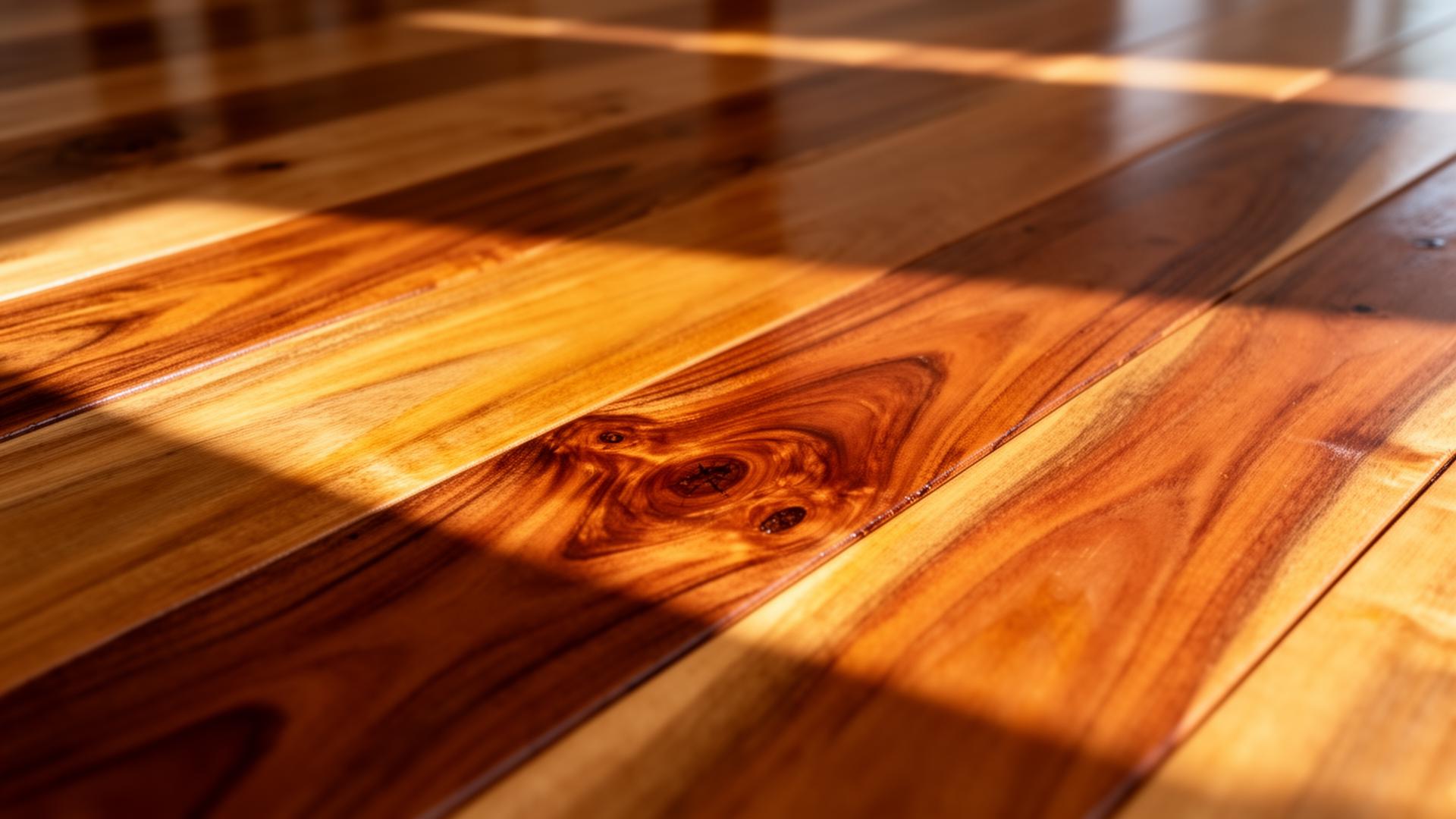
Local teak — what carpenters here simply call guanacaste, after both the tree and the province — is the structural backbone of nearly every honest building in this region. It is dense enough that termites lose interest, oily enough that salt air slides off, and stiff enough that you can span a fifteen-foot palapa with beams you can wrap one hand around.
It also darkens beautifully. New teak is the colour of honey. Five years in, it is the colour of espresso. Ten years in, it has the same patina as the trunks it was milled from. We oil it once a year with a mixture of linseed and lime, and it asks for nothing else.
Volcanic stone — the bones of the road
The Nicoya Peninsula is, geologically, a long ridge of volcanic basalt. The same dark stone that breaks through every red-earth road is the stone we cut for our foundations, retaining walls, plunge-pool coping, and the column bases that lift our wooden structures off the wet ground.
It is heavy, slow to source, and impossible to fake. It is also, crucially, cool. A volcanic-stone wall on the shaded side of a house will sit ten degrees below ambient through the dry season, which means a bedroom built against one barely needs a fan.
"We do not import stone to Guanacaste. The stone is already here. It is just a question of asking it nicely."
— Mateo Vélez
Lime wash — the surface that breathes
Paint, in this climate, is a losing proposition. The humidity pushes from inside, the sun bleaches from outside, and within two seasons most acrylic finishes are blistering. We have returned, like most of the older houses in the region, to hand-applied lime wash — a mineral pigment slaked in water and brushed on in five thin coats.
It is breathable, which matters more than it sounds: walls in the tropics need to release the moisture they absorb. It is alkaline enough to discourage mould. And it ages by becoming softer, not uglier — a wall lime-washed five years ago looks, if anything, more confident than the day it dried.
Palapa thatch — the roof that the wind respects
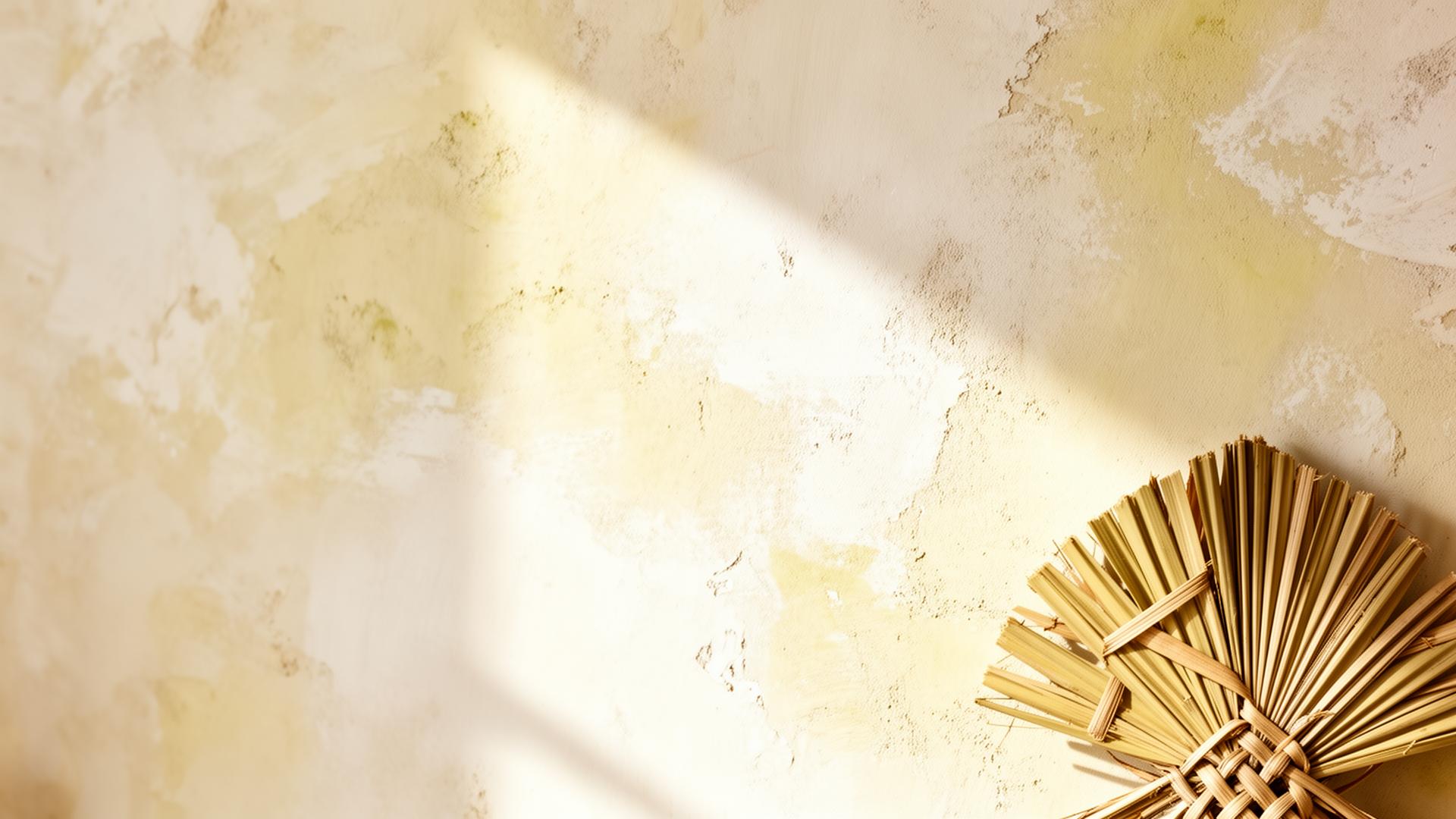
The fourth material is the one most visitors notice first: the dense, layered thatch of suita palm fronds that crowns nearly every traditional building in Guanacaste. A well-made palapa roof is forty centimetres thick, lasts twenty years, and shrugs off the heaviest invierno downpour without leaking a drop.
More importantly, it insulates by ventilation. The thatch is loose enough that hot air rises straight through it and escapes at the ridge, which is why the space beneath a palapa is always cooler than the ambient air outside. There is no mechanical equivalent that costs less or works better. The carpenters who tie them do so by hand, with palm cord, in two-day rotations, and the craft is — for now — still being passed down.
What we have learned not to use
Half of building intelligently in the tropics is knowing what to leave out. We have, over many projects, abandoned the following:
- Steel framing exposed to salt air — rusts inside two years, no matter the coating.
- **Polished plaster (Venetian, tadelakt)** — beautiful in Marrakesh, sweats and cracks here.
- Floor-to-ceiling glass without deep overhang — turns a bedroom into a greenhouse by 9 a.m.
- Dark roof tiles — radiate heat downward all night.
- Anything imported that could have been sourced within fifty kilometres.
Practical notes
Sourcing: Guanacaste teak from FSC-certified mills in Hojancha; basalt from quarries near Santa Cruz; suita thatch from cooperatives in Nicoya itself. None of it requires a shipping container.
Maintenance: teak re-oiled annually, lime wash refreshed every three to five years, palapa thatch inspected after each invierno and patched as needed (usually two days of work).
Cost: lower than the imported alternative in nearly every case, once you account for shipping, finishing, and the time the imported material spends failing.
If you'd like to see these materials in person, [our suites in Nosara](/properties) are built almost entirely from them — and our team is [happy to walk you through the choices](/contact).