Slow travel in Nosara begins at first light on Playa Guiones — a field note on the quiet hour between howler monkeys and the first surfers.
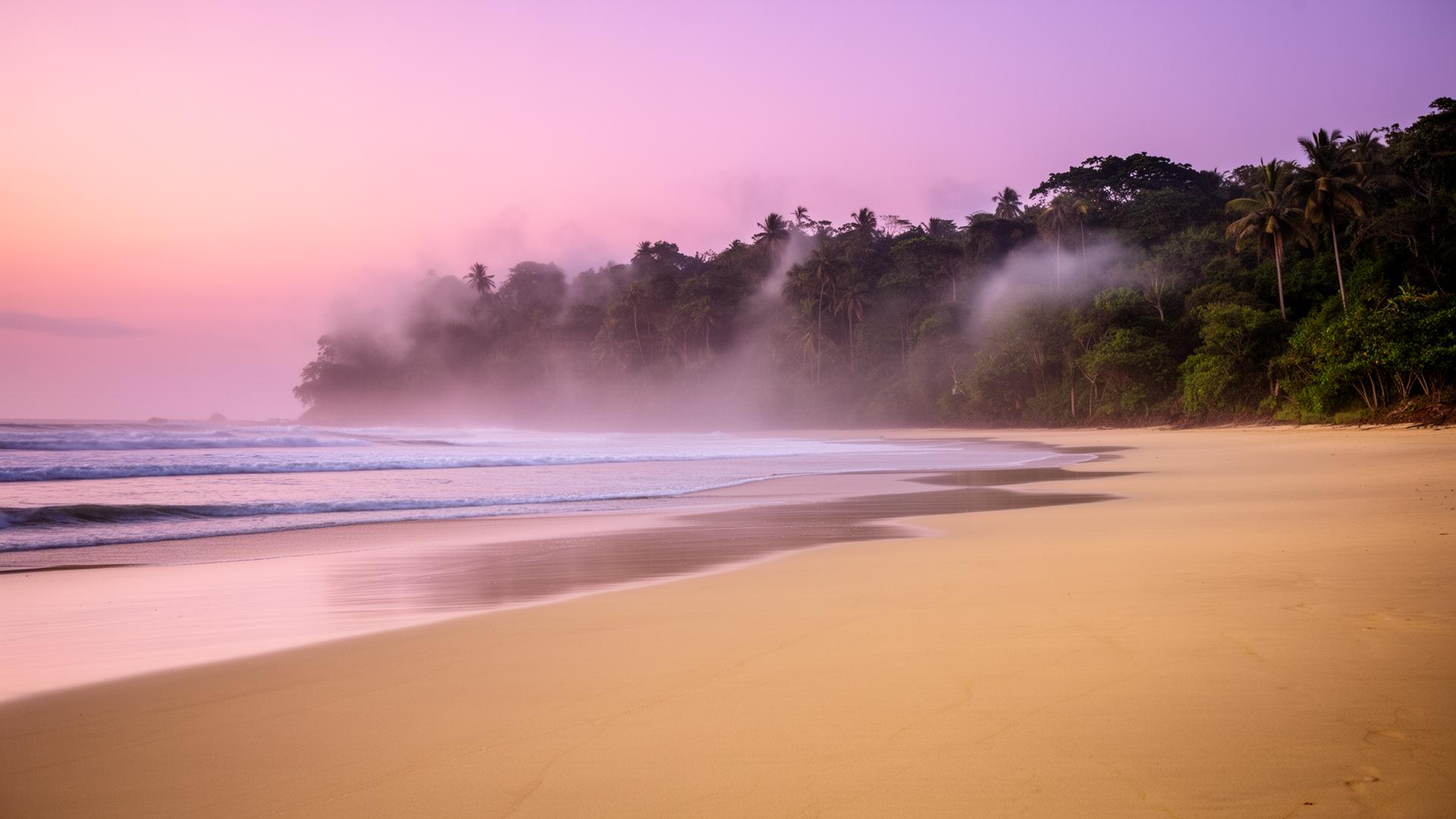
There is a particular hour above Playa Guiones, in the small Costa Rican town of Nosara, when the jungle has not yet decided whether to be loud. The howler monkeys are still negotiating the canopy. The wind from the Pacific has not yet found its way through the guanacaste trees. This is the hour we design for, and the hour, increasingly, that people travel here to find.
The geography of quiet
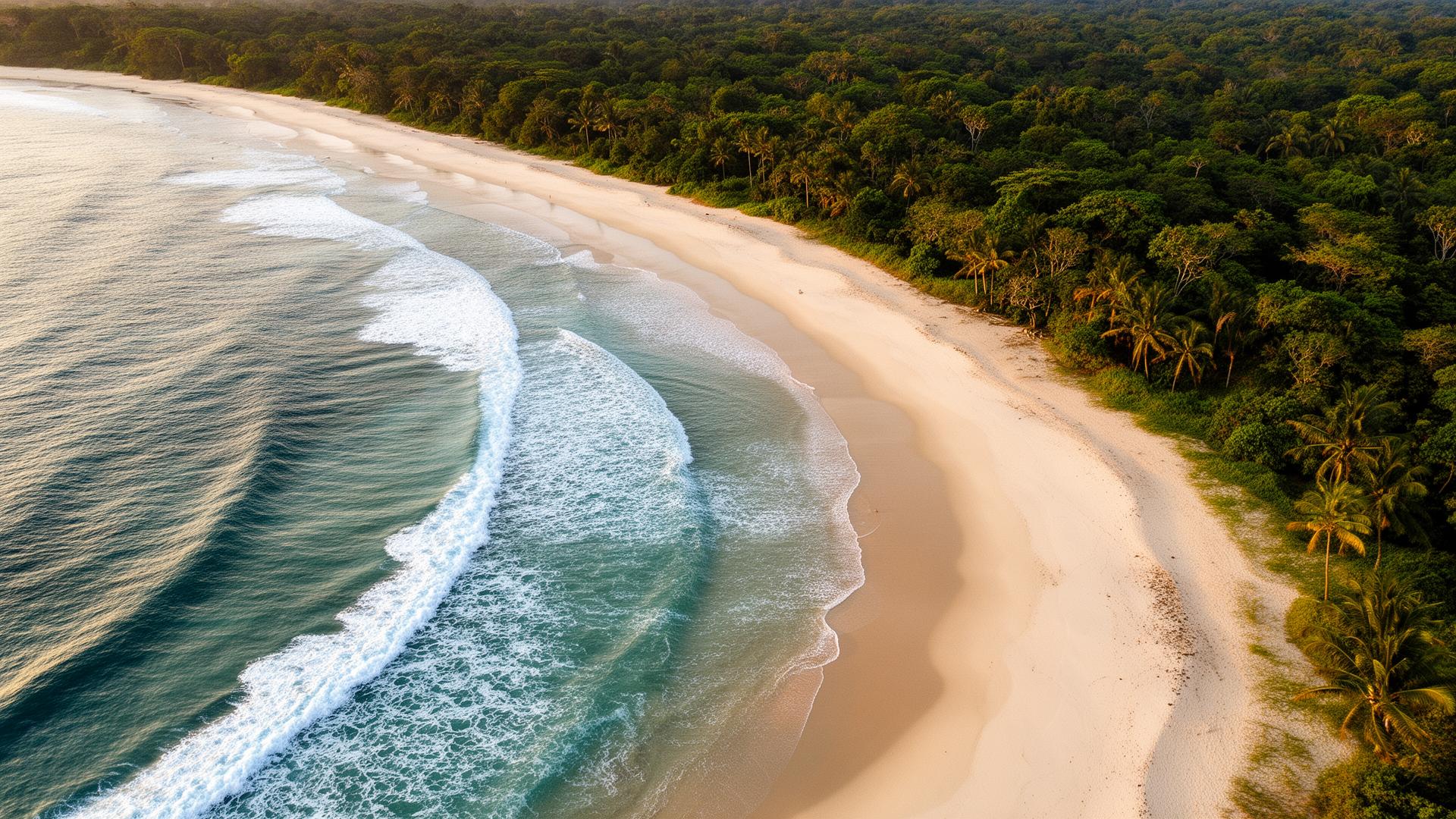
Nosara sits on the western edge of the Nicoya Peninsula, in the province of Guanacaste — one of the world's five recognised Blue Zones, where people live measurably longer and, by every account, less anxiously. There are no traffic lights. The main road into Playa Guiones is still red dirt for most of its length, and the town has chosen, deliberately and with some difficulty, to keep it that way.
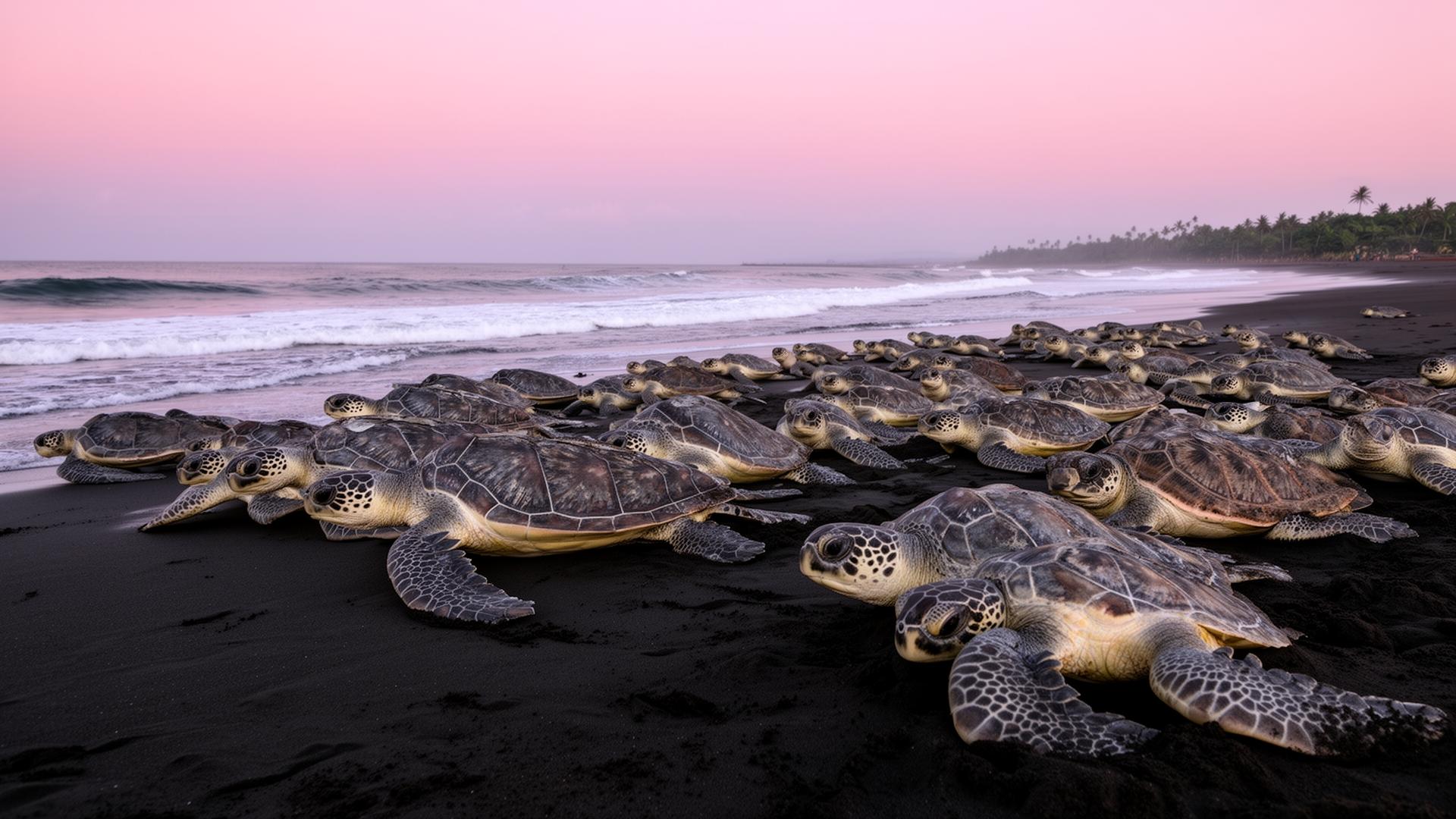
That choice has consequences. There are no neon signs on the beach. There is no boardwalk. The jungle comes down almost to the high-tide line, and the line itself moves enough through the year that nothing permanent can be built on it. Slowness, in Nosara, is not a marketing decision. It is a topographical one.
What stillness actually looks like
People sometimes arrive expecting an aesthetic — white linen, raked sand, a particular kind of teacup. The stillness we mean is closer to a practice. You wake when the light wakes you, usually around five. You walk down to the beach barefoot because shoes are an unnecessary intermediary. You stand in the water long enough that the cold stops being cold. You come back, and the day, somehow, is already long.
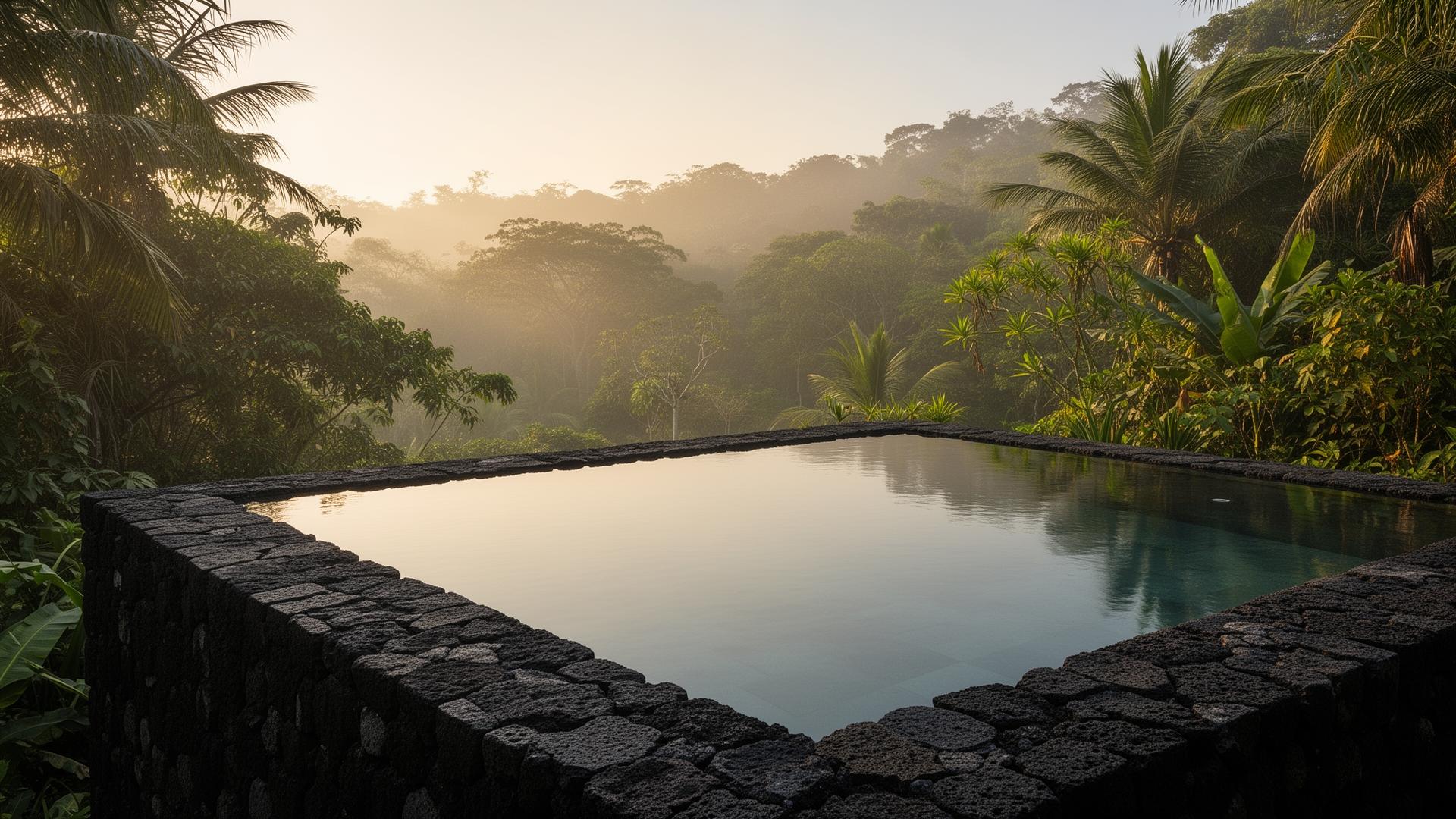
The Japanese have a word, ma, for the meaningful pause between two notes. Nosara's architecture, when it is honest, is built around ma. A deep eave that holds back the heat. A breezeway between the bedroom and the bath. A pool that is just slightly too far from the kitchen, so that walking to it counts as the morning's first decision.
"The best rooms in the tropics are the ones you don't quite live inside. You live on the threshold of them."
— Anaïs Castro
Designing a room that listens
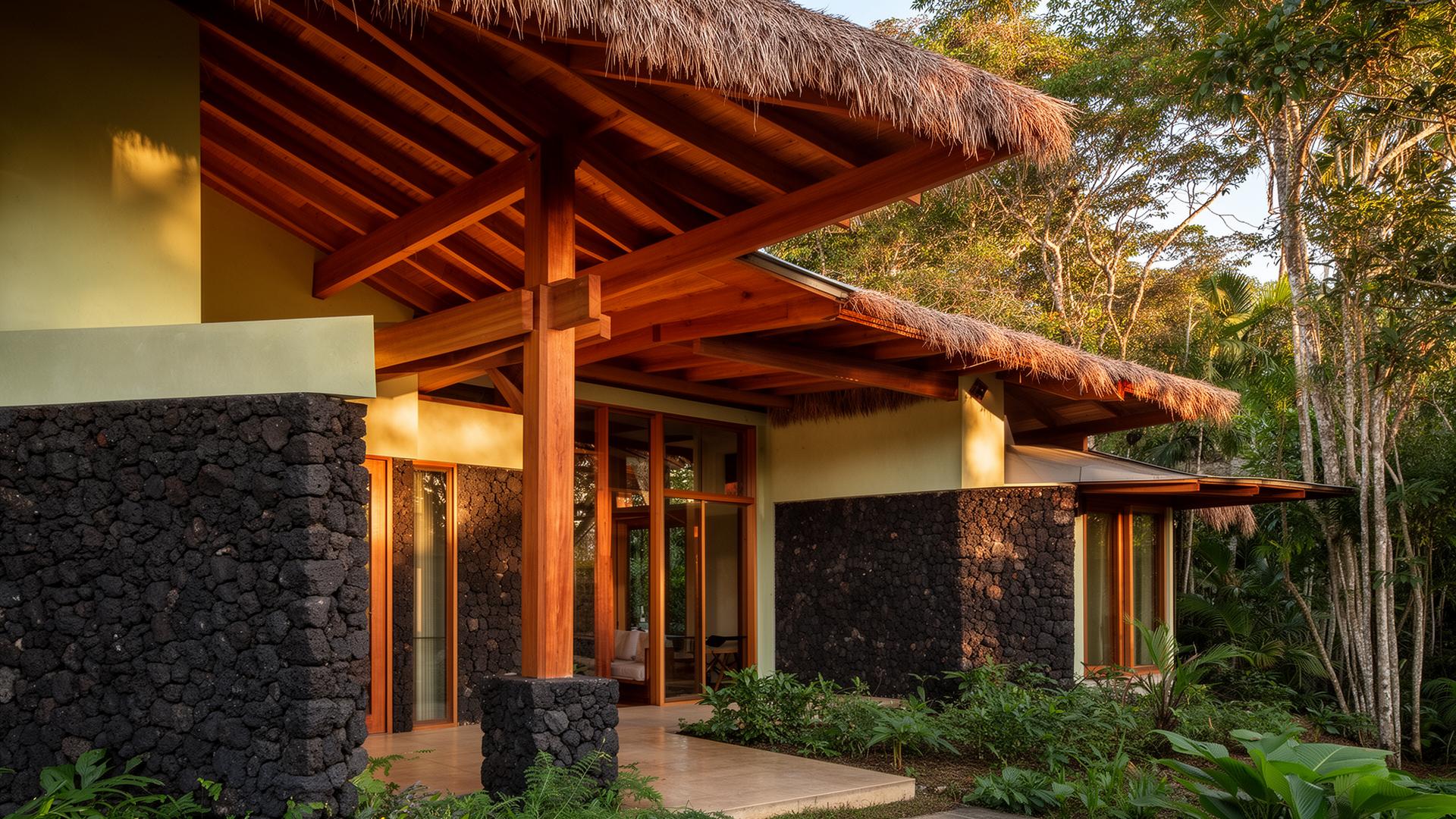
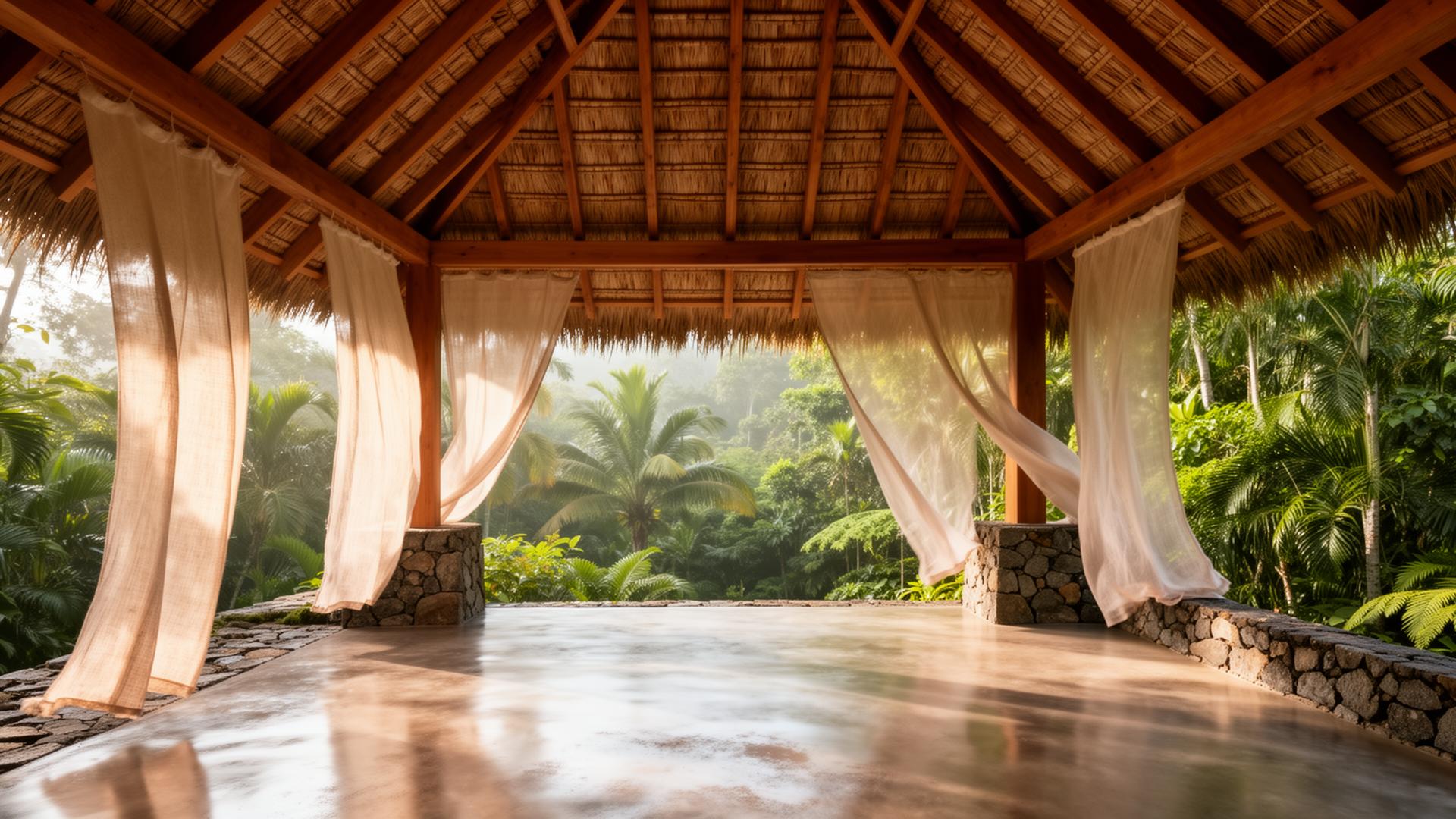
Our studio above Playa Guiones is a single open pavilion with a palapa thatch roof, polished concrete floors, and four sides of gauzy linen that move whenever the wind from the Pacific arrives. We did not air-condition it. The deep overhang and the cross-breeze do the work that mechanical cooling would otherwise pretend to do, and the room sounds, all day, like the trees around it.
We chose Guanacaste teak for the beams because it is the wood the carpenters here have been working with for four generations. We chose dark volcanic stone for the bases because it is what the road cuts through. Nothing in the building had to travel more than thirty kilometres to arrive, and nothing in it pretends to be from somewhere else. Stillness, in the end, is partly a matter of materials that have stopped trying to be impressive.
How to actually slow down
People ask us, sometimes shyly, how to slow down. The truthful answer is that you can't decide to. You can only remove the structures that prevent it. Below are the few small architectures we have come to trust.
- Walk before you read anything. No phone, no book, no plan — twenty minutes on the sand before the first opinion of the day arrives.
- Eat breakfast outside. Even when it rains. Especially when it rains.
- Swim once a day in something that is not a pool. The ocean at Guiones, the río Nosara upstream, a tide pool — anything moving.
- Sit through one full sunset without photographing it. The colour changes faster than a phone can keep up with anyway.
- Let the howler monkeys be your alarm. They are, in our experience, more reliable than anything mechanical.
Why slowness scales
There is a quiet myth that slow travel is a luxury — something only available to people with unstructured time and good weather. We have come to believe the opposite. Slowness is the cheapest thing Nosara has to offer. The beach is free. The light is free. The howler monkeys, regrettably for nearby sleepers, are also free.
What costs something is the room you do it from — a building that doesn't fight the climate, doesn't demand your attention, doesn't ask you to perform leisure. That is what we are trying, slowly and not always successfully, to build.
Practical notes
Best months for early-morning quiet: mid-December through April, the verano dry season. The howler monkeys start around 5 a.m.
What to bring: a thin linen layer for sunrise (it's cooler than you'd expect), reef-safe sunscreen, and one fewer book than you think.
Where to stay: the [Noma suites](/properties) are designed for exactly this hour — open-air, cross-ventilated, three minutes' walk from the southern end of Playa Guiones.
If you'd like to spend a week practising this, [our suites are here](/properties), and our [concierge can plan the rest](/contact). We do not, as a rule, plan very much.