Notes on buying land on the Nicoya Peninsula — the five questions we ask before breaking ground in a Blue Zone, and why we say no far more often than we say yes.
People sometimes assume that buying land on the Nicoya Peninsula is a matter of finding a view and then deciding what to build. Twelve years and seventeen projects in, we can tell you that it is closer to the opposite. The view is the easy part. The hard part is the ridge that holds the view — the water, the soil, the road, the neighbours, the wind, and the long, quiet question of whether the land actually wants a building on it at all.
Why the Nicoya Peninsula
The Nicoya is one of the world's five recognised Blue Zones — places where people live measurably longer, with less chronic disease, than the global average. The reasons are debated (diet, community, a high-calcium aquifer, a low-stress culture), but the geography is part of it: a dry tropical forest climate, a steady ocean breeze, and a topography that has, historically, made over-development difficult.
That last factor is changing. Land prices around Nosara have tripled in the last decade. New roads are being graded into ridges that, ten years ago, you could only reach on horseback. The peninsula's character is not, in our view, automatically protected. It depends on the choices each new owner makes, project by project.
The five questions we ask before we say yes
Over the years we have whittled our diligence down to five questions. We say no to roughly four out of five sites we look at. Below is why.
1. Is there water — and will there still be water in ten years?
Guanacaste's verano is dry. Many parcels rely on private wells that have, over the past five seasons, begun to draw down. We commission an independent hydrogeology report on every site before we sign anything: well log, recovery rate, neighbour interference, and the depth of the seasonal water table. If the report is ambiguous, we walk away.
2. What is the microclimate, not the climate?
Nosara has one climate; the ridge a kilometre inland has another; the valley below it has a third. We spend at least one full day on each candidate site — usually two, one in verano and one in invierno — measuring wind, sun angle through the canopy, and how long after rain the ground is still wet. A site that feels perfect at noon in February can be a windless oven at four in October.
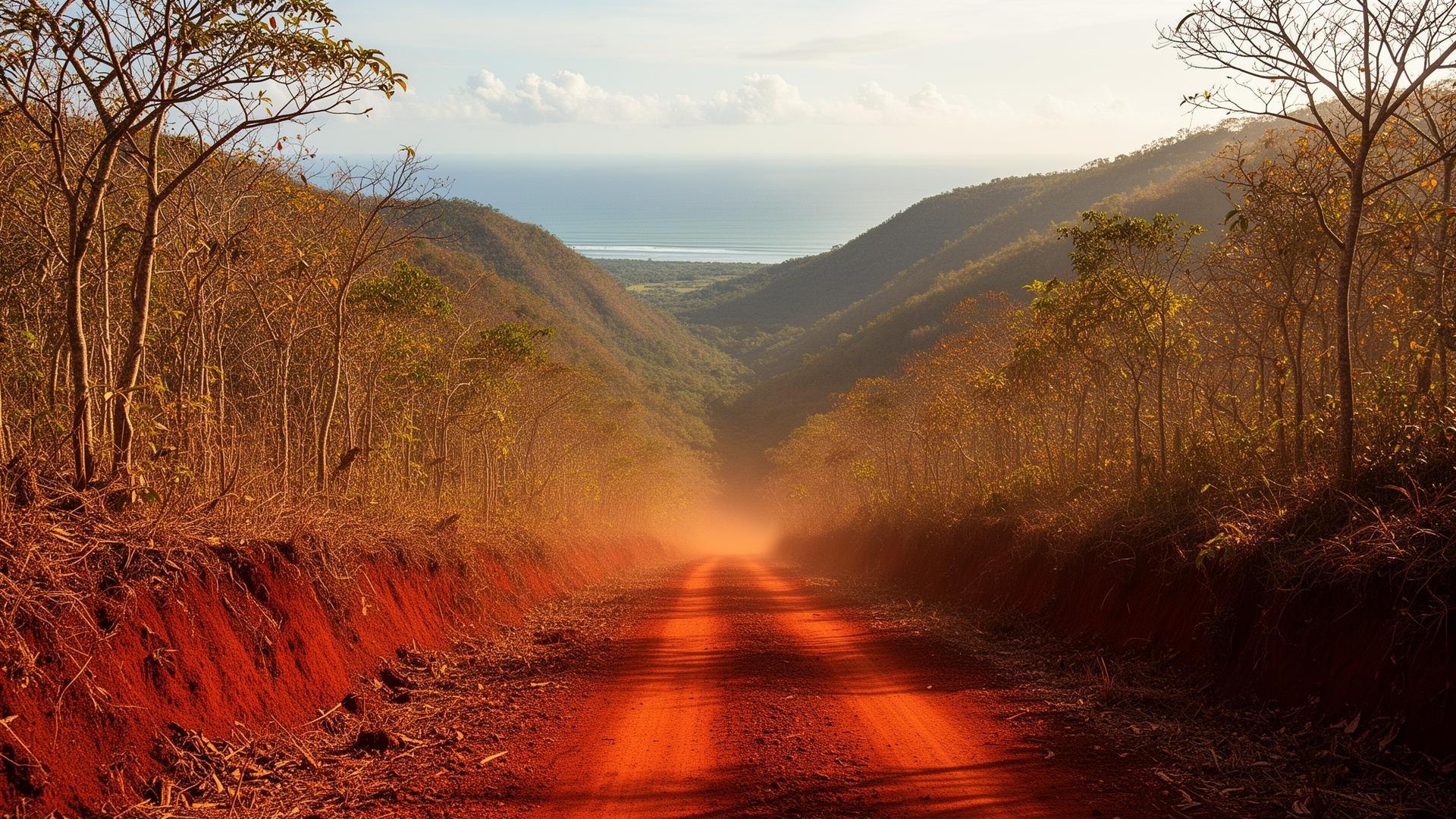
3. Can the access road survive the rainy season?
Many of the most beautiful parcels are reached by unpaved roads that are passable in the dry months and impassable in the wet ones. We drive every access road in invierno, after the heaviest rain we can find, in the same vehicle a future guest would use. If we cannot get up the hill in a rented 4x4 with regular tyres, we do not build there.
4. What is already growing on the land?
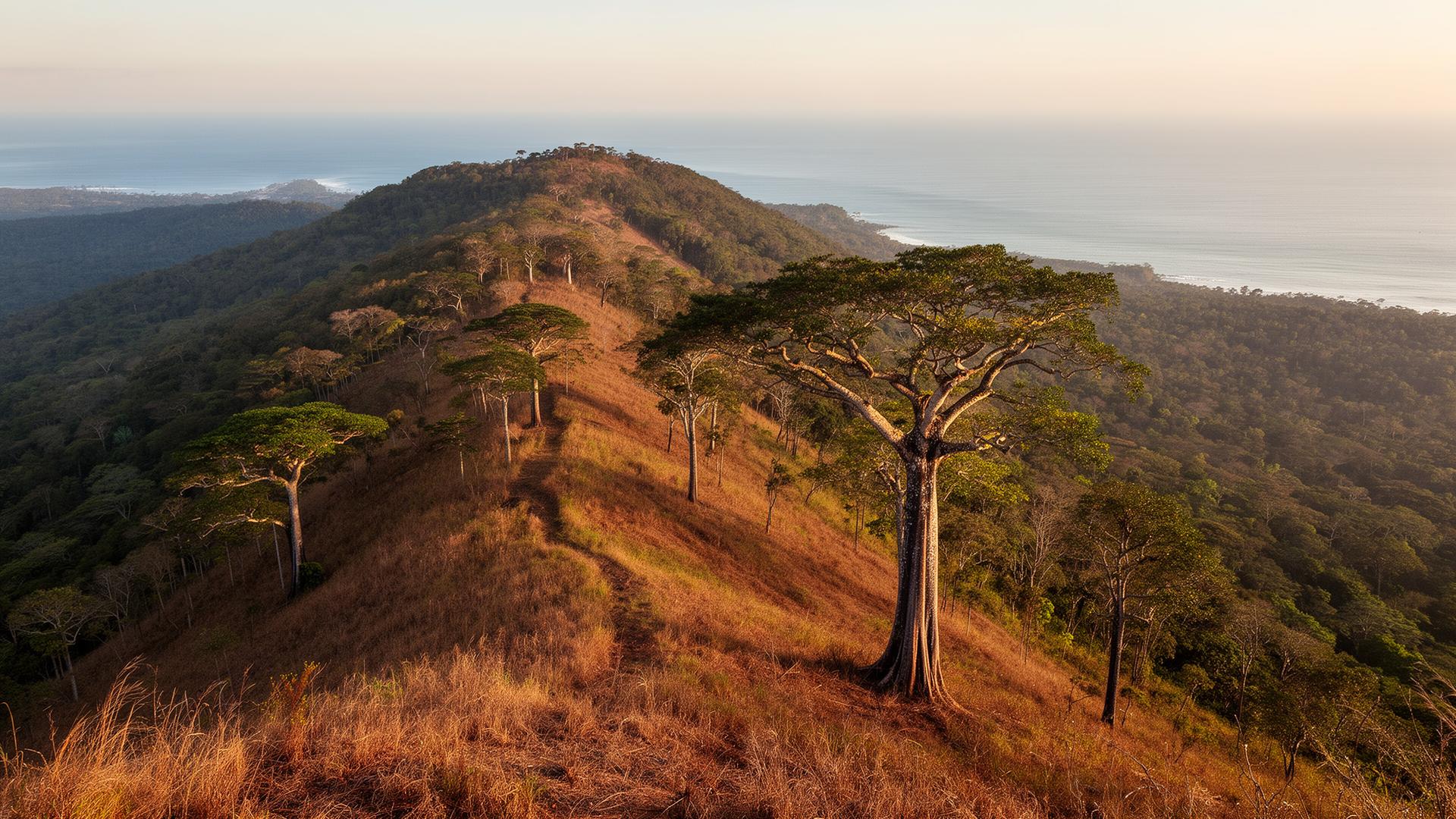
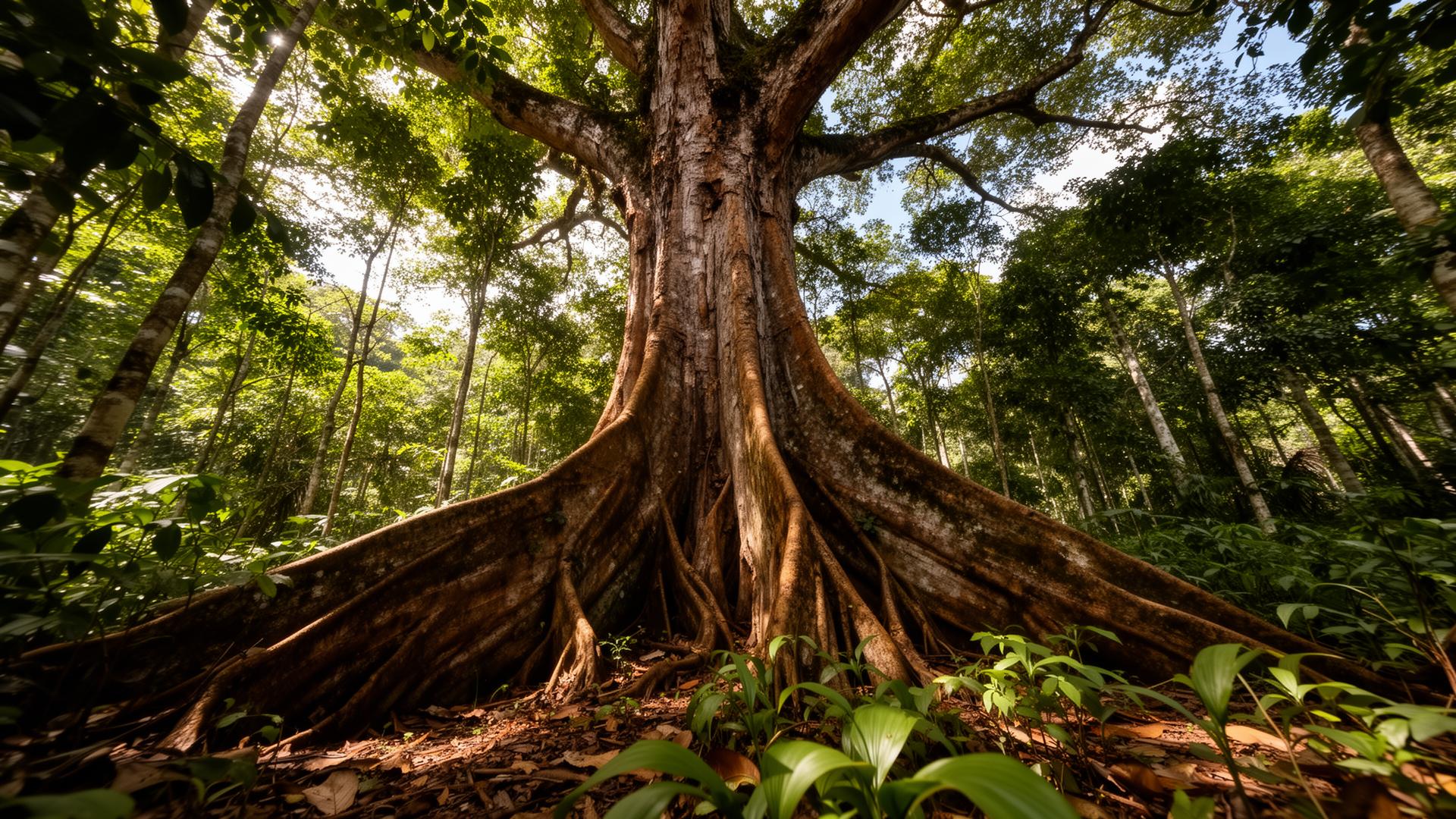
A mature ceiba tree, a guanacaste, a stand of old-growth cenízaro — these are not site furniture. They are the soul of the parcel, and they have been doing the slow work of holding the soil and shading the ground for longer than any building we will put up. Our rule is simple: if a site requires the removal of any tree with a trunk wider than the span of two hands, the design has to change. We do not change the trees.
5. What do the neighbours actually do at night?
This is the question most overlooked. A ridge that is silent at 2 p.m. on a Tuesday in March can sit directly above a music venue, a generator, or a finca that runs cattle trucks at 4 a.m. We spend at least one night on every shortlisted site, in a tent if we have to, and we ask the people in the nearest house — politely, in Spanish — what their week sounds like.
"The land tells you what it wants. The owner's job is to be quiet enough, for long enough, to hear it."
— Carlos Fonseca
Why we say no four times out of five
Most sites fail one of the five questions. Some fail three or four. We have walked away from parcels with extraordinary views because the well was on its third deepening in two years, from beachfront because the access road washes out for two weeks every September, and from a hilltop in San Juanillo, twice, because the seller was unwilling to leave a single ceiba standing.
We do not regret any of those decisions. We regret, occasionally, the one we made too quickly in our second year. We are not making that mistake again.
What 'yes' looks like
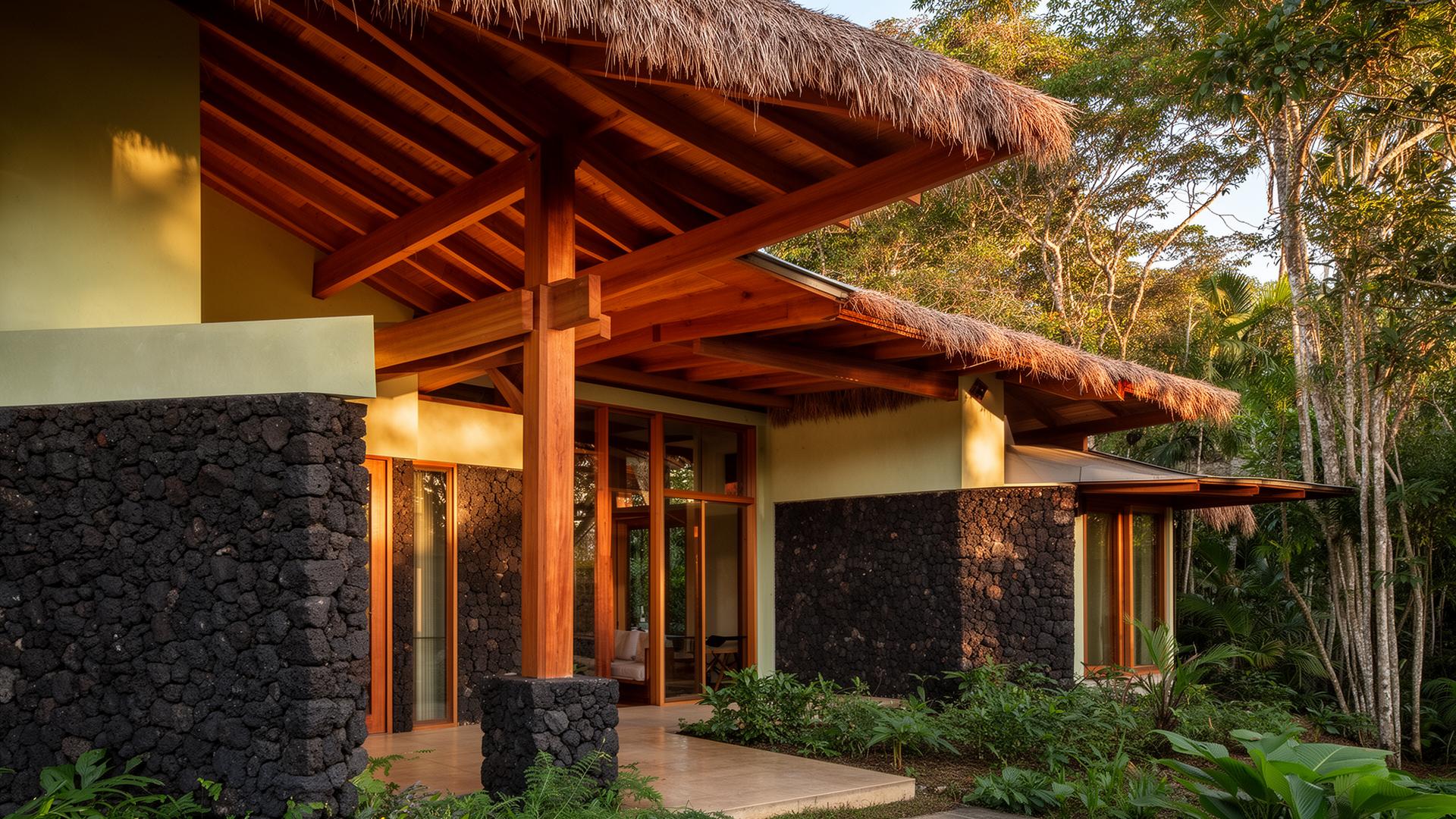
When a site does pass all five, the design almost writes itself. The water tells you where the kitchen should be. The microclimate tells you which way the bedroom should face. The road tells you where the parking should sit. The trees draw the building's footprint, and the neighbours' rhythm sets the orientation of the outdoor rooms.
A good site, in other words, is not a blank canvas. It is a brief — and the building, if it is honest, is the answer.
- Independent water report before any offer.
- Two seasons on site before any design.
- Drive the road in the rain before any signature.
- Map the trees before any clearing.
- Sleep on the land before any commitment.
Practical notes
Legal: all land purchases in Costa Rica should go through a notario and a title-insurance company. Coastal land within 200 m of the high-tide line (the Zona Marítima Terrestre) is concession-only, not freehold.
Permits: the SETENA environmental study is mandatory for any new construction over 500 m², and increasingly expected even below that.
Timeline: from first visit to finished house, our average is twenty-two months. The ones we have tried to do faster have, without exception, gone slower.
If you are thinking about a project on the peninsula, we are [happy to walk a site with you](/contact) before you sign anything. We will tell you, candidly, whether we would build on it.